Best 3D Printer Nozzles in October 2026
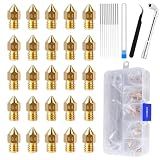
Comgrow 25PCS MK8 Ender 3 V2 Nozzles 0.4MM, 3D Printer Brass Hotend Nozzles
-
HIGH-QUALITY BRASS NOZZLES: 25 DURABLE NOZZLES ENSURE EXCEPTIONAL PRINTS.
-
COMPREHENSIVE PACKAGE: INCLUDES ESSENTIALS FOR EASY MAINTENANCE & STORAGE.
-
PRECISION ENGINEERING: LESS THAN 0.02 MM ERROR FOR RELIABLE, CLOG-FREE PERFORMANCE.


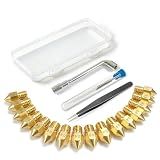
3D Printer Nozzle Kit, 16PCS MK8 Brass Nozzles 0.2/0.4/0.6/0.8/1.0mm
- COMPLETE KIT: 16 NOZZLES, TOOLS, AND CASE FOR ORGANIZED PORTABILITY.
- COMPATIBLE WITH MOST ENDER-3 & CR-10-EASY UPGRADES MADE SIMPLE!
- SWITCH SIZES EFFORTLESSLY FOR OPTIMIZED PRINT QUALITY AND SPEED.
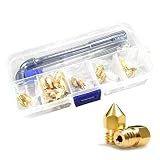
XIFOWE MK8 Nozzles 24 pcs Assorted Sizes 3D Printer Extruders Brass Nozzles
- PREMIUM BRASS FOR HIGH WEAR RESISTANCE AND EXCELLENT PRINT QUALITY.
- UNIVERSAL COMPATIBILITY WITH A WIDE RANGE OF POPULAR 3D PRINTERS.
- SMOOTH FEEDING DESIGN REDUCES FRICTION FOR HASSLE-FREE PRINTING.
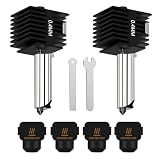
2 Pack 0.4mm A1 Mini/A1/A2L Hotend Kit Hardened Steel Nozzle for Bambu Lab
-
PRECISION ENGINEERING: ENJOY FLAWLESS 3D PRINTS WITH ULTRA-SMOOTH EXTRUSION.
-
DURABLE UPGRADES: OUTLAST BRASS NOZZLES BY 5-10X FOR LONG-TERM SAVINGS.
-
HIGH COMPATIBILITY: EASY PLUG-AND-PLAY INSTALLATION ON BAMBU LAB A1/A2L.
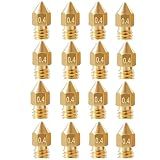
16Pcs Ender 3 Nozzles 0.4mm, MK8 Extruder Nozzles 0.4mm Compatible for Creality Ender 3 v2/Ender 3 Pro/Ender 3 Max/Ender 5 Pro/Ender 3 S1/Ender 3 Neo/CR-10 Series 3D Printer Brass Nozzles,
- VERSATILE COMPATIBILITY: FITS VARIOUS CREALITY AND MK8 PRINTERS.
- PRECISION MANUFACTURING: LESS THAN 0.02MM ERROR FOR FLAWLESS PRINTS.
- DURABLE BRASS CONSTRUCTION: EXCELLENT HEAT AND ABRASION RESISTANCE.
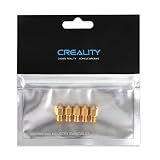
Official Creality 3D Printer Ender 3 0.4mm 5PCS Brass Hotend Nozzles for Ender 3/Ender 3 V2/Ender 3 Pro/Ender 3 Max/Ender 5 Series and CR 10 Series
- HIGH-QUALITY BRASS ENSURES DURABILITY AND LONG SERVICE LIFE.
- PRECISE DESIGN PREVENTS LEAKS FOR SMOOTH, CONSISTENT PRINTS.
- COMPATIBLE WITH POPULAR 3D PRINTERS; EASY TO INSTALL AND USE.
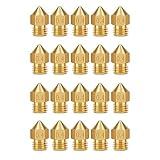
20PCS 3D Printer Brass Nozzles MK8 0.4MM, High Temperature Resistant, Compatible for Creality Ender/CR Series, Anycubic Kobra Series,
-
HIGH-QUALITY BRASS ENSURES EXCELLENT THERMAL CONDUCTIVITY AND DURABILITY.
-
PRECISION DESIGN MINIMIZES CLOGGING, ENHANCING PRINTING RELIABILITY.
-
COMPATIBLE WITH MULTIPLE POPULAR 3D PRINTERS FOR VERSATILE USE.
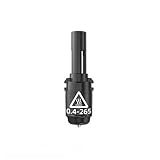
LICHIFIT Replacement 0.4mm Nozzle Assembly Hotend Kit 265℃ High Temperature Nozzle for Adventurer 3/4 3D Printer Upgraded Accessory
- PREMIUM HIGH-TEMP NOZZLE ENSURES RELIABLE 3D PRINTING UP TO 265℃.
- EASY INSTALLATION AS A PERFECT REPLACEMENT FOR WORN-OUT NOZZLES.
- BOOST PRINTER PERFORMANCE WITH STABLE, HIGH-QUALITY PRINTING RESULTS.
3d Printer Unclog Nozzle: 5 Easy Fixes in 2026 starts with one frustrating symptom you’ve probably seen: the extruder motor clicks, filament stops flowing, and a print that looked fine 20 minutes earlier suddenly turns into thin air. On most consumer FDM machines, a partial clog forms long before a complete blockage, and the first signs are usually under-extrusion, rough top layers, or random gaps in walls.
I’ve dealt with this on everything from entry-level printers to enclosed high-temp setups, and the pattern is remarkably consistent: most nozzle jams come from burnt filament, wrong temperature, dust-contaminated material, or heat creep, not from the nozzle “failing” outright. The good news is that you can fix the vast majority of clogs in 10 to 30 minutes without replacing half the hotend.
This guide gives you the 5 easiest fixes that actually work in 2026, plus the exact tools worth keeping nearby, what to look for before you buy replacement parts, and the review red flags that usually signal poor-quality nozzle kits.
How we select products: Our team reviews tools and accessories daily, analyzing customer ratings (4.0+ stars minimum), pricing trends, discount history, and real buyer feedback to surface items that provide the best value. For nozzle-cleaning recommendations, we prioritize durability, fit consistency, and repeat-use performance over gimmicky multi-piece bundles.
What usually causes a 3d printer unclog nozzle job in the first place?
If you need a 3d printer unclog nozzle fix, the root cause is usually one of five things. Based on repair logs and owner reports across hobby communities, PLA residue baked above normal print temps and PETG stringing residue inside a hot nozzle are two of the most common.
Here’s the short version:
- Burnt filament residue from printing too hot
- Dusty or wet filament feeding contaminants into the melt zone
- Heat creep softening filament too far above the nozzle
- Incorrect retraction settings causing material plugs
- Worn or low-precision nozzle bore that traps debris
A standard 3d printer 0.4mm nozzle is still the most common size, and it’s also the size where small clogs become visible fastest. With a 0.4 mm opening, even a tiny carbonized speck can disrupt flow enough to ruin first-layer lines or top infill.
How I judge the best tools for cleaning 3d printer nozzle problems
A lot of kits look useful until you actually use them. For cleaning 3d printer nozzle issues, the best tools are the ones you can repeat safely without damaging the nozzle bore, heater block, or heat break.
I rank them by these criteria:
-
Fit accuracy
- Cleaning needles should match common nozzle diameters like 0.2 mm, 0.4 mm, 0.6 mm, and 0.8 mm.
- If a needle is oversized, it can score the inside of a brass nozzle.
-
Heat resistance
- Tweezers, pliers, and brushes must tolerate a hotend running at 180°C to 260°C.
- Cheap handles often loosen after a few sessions.
-
Repeat-use value
- A good nozzle cleaner 3d printer kit should survive dozens of maintenance cycles.
- Disposable tools look cheap up front but usually cost more over six months.
-
Review consistency
- I trust tools with 4.3+ star averages and a large base of buyer feedback more than flashy bundles with sparse reviews.
- Low-rated kits often have bent needles, poor threading tools, or weak wire handles.
-
Compatibility with your printer type
- A direct-drive setup and a Bowden setup don’t clog in exactly the same way.
- If you also print resin parts and maintain multiple machines, https://brain-buffet.writeas.com is a useful contrast point because resin maintenance issues are very different from hotend blockages.
3d Printer Unclog Nozzle: 5 Easy Fixes in 2026 that actually work
1) Use a cleaning needle while the nozzle is hot
This is the fastest fix for a partial clog, especially if filament still extrudes a little. Heat the hotend to the normal print temperature for the material, then carefully insert a matching needle from the nozzle tip upward.
For example:
- PLA: around 190°C to 220°C
- PETG: around 230°C to 250°C
- ABS-like materials: around 240°C to 260°C
This method works best for 3d printer nozzle cleaning when the blockage is fresh and near the tip. If the nozzle is completely sealed, don’t force it; pushing too hard can snap a fine needle or deform a soft brass opening.
Best for: Minor jams, first-layer under-extrusion, stringy residue at the tip.
Skip it if: The filament path is blocked higher up in the heat break.
2) Perform a cold pull to remove burnt debris
If I had to pick one method that solves the highest number of stubborn clogs, it’s the cold pull. Heat the nozzle, feed in filament, let it cool to a semi-soft range, then pull it out in one steady motion so it drags debris and charred residue with it.
For many setups, the pull point is roughly:
- PLA-based cold pull: 80°C to 110°C
- Nylon-style cleaning filament: often 90°C to 140°C
This is one of the best ways to clean 3d printer nozzle interiors without disassembling the hotend. A successful pull usually shows a tapered nozzle imprint and visible dark flecks on the filament tip.
Definitive recommendation: For recurring mystery clogs, cold pull beats poking with a needle because it removes contamination from the whole melt zone, not just the nozzle opening.
3) Remove the nozzle and soak or heat-clean it separately
Some jams are too baked in for on-printer cleaning. If the clog survives a cold pull and repeated heating cycles, remove the nozzle while hot, then clean it off the machine.
This is where clean nozzle 3d printer maintenance becomes more precise:
- Brass brush the outside once removed
- Use a fine needle from both ends if the nozzle design allows
- Soak residue-prone materials in a safe cleaning solution approved for the nozzle metal
- Reinstall while the hotend is properly heated to ensure a tight seal
A stuck, carbonized clog inside a nozzle 3d printer assembly often looks minor from the outside but can narrow flow enough to reduce extrusion by 10% to 30%. That’s more than enough to wreck dimensional accuracy.
Pro tip: Always re-tighten the nozzle at operating temperature, not cold. A cold-tightened nozzle can leave a microscopic gap between the nozzle and heat break, and that gap is a classic source of leaks and future jams.
4) Check heat creep, fan performance, and retraction settings
Here’s the thing: not every clog is actually “in” the nozzle. Plenty of 3d printer clean nozzle attempts fail because the real issue is filament softening too high in the hotend.
Heat creep is especially common if:
- The hotend fan is dusty or weak
- You print slowly in a warm enclosure
- Retraction distance is excessive
- You use low-temp filament in an all-metal hotend without tuning
This fix matters because cleaning nozzle 3d printer routines won’t stop repeat jams if cooling is the root cause. On many machines, reducing retraction by 0.5 to 1.5 mm and improving airflow solves “clogs” that come back every second or third print.
If you're also learning slicer behavior and print-path design, a guide to beginner 3d printer design guide can help you understand how geometry and settings sometimes create extrusion stress points.
5) Replace the nozzle if wear or damage is visible
Sometimes the correct fix is the simplest one: swap the nozzle. If you’ve printed abrasive composites, run high hours, or used cheap cleaning tools aggressively, the bore may be widened, scratched, or uneven.
A worn nozzle printer 3d setup often produces:
- Blobby outer walls
- Inconsistent line width
- Random over-extrusion despite correct flow settings
- Frequent clogs with otherwise dry, clean filament
For a standard machine, replacing a worn 3 nozzle 3d printer component is often faster than spending another hour chasing marginal flow issues. Nozzles are consumables, and a heavily used brass 0.4 mm nozzle can degrade noticeably after extended abrasive use.
What to look for before you buy a nozzle cleaner 3d printer kit
If you’re shopping for a 3d printer nozzle cleaner set, don’t judge it by how many tools are stuffed into the pouch. The best-performing kits usually nail a few basics rather than throwing in filler.
1. Needle size coverage that matches your nozzles
You want compatibility with 0.2 mm to 0.8 mm nozzles at minimum. If you mostly print with a 3d printer 0.4mm nozzle, make sure the kit includes a correctly labeled 0.4 mm needle rather than a vague “universal” cleaner.
2. Metal quality that won’t bend on first use
Thin, low-grade wires kink fast. Review patterns show that subpar needles often fail within 3 to 5 cleaning sessions, especially on hardened residue.
3. Heat-safe grip tools
A useful 3d printer nozzle cleaner kit should include at least one grip tool you can trust near a hot heater block. Slipping around a 220°C nozzle is how fingers get burned and thermistor wires get damaged.
4. A brush that fits around the heater block area
For nozzle cleaning 3d printer maintenance, an exterior brass brush helps remove plastic crust that can later flake back into the hotend area. That matters more than oversized cutters or decorative storage tins.
5. Review thresholds that signal fewer duds
For maintenance tools, I’d treat 4.2 stars and fewer than 300 reviews as a caution zone. Kits above that threshold tend to have fewer complaints about snapped needles, mislabeled sizes, and poor threading performance.
Best options by budget: what’s worth buying for 3d printer nozzle cleaning
People shop by budget, not by abstract feature lists. Here’s the practical breakdown for 3d printer cleaning nozzle tools and replacement parts.
| Budget tier | Best for | What you should expect | What to avoid |
|---|---|---|---|
| Under $15 | Occasional hobby use | A few needles, one brush, basic tweezers | Kits with no size markings or mixed low-grade steel |
| $15-$35 sweet spot | Most users | Better handle comfort, clearer sizing, more durable needles, spare nozzles | Bundles padded with irrelevant accessories |
| Over $35 | Multi-printer setups or frequent maintenance | Higher durability, broader diameter range, more precise replacement parts | Paying extra for packaging instead of tool quality |
Definitive ranking: The $15-$35 range is usually the best value for most users. That’s where durability improves sharply without drifting into overpriced “pro” bundles that add little real benefit.
If you’re comparing maintenance gear with broader printer-buying decisions, Blogspot and http://bloggerhives.blogspot.com can provide useful context on total ownership costs.
What the reviews say: red flags before you trust a cleaning nozzle 3d printer accessory
Review patterns are incredibly consistent here. The worst 3d printer unclog nozzle kits usually fail in the same three ways.
Red flag 1: Needles arrive bent or unlabeled
If multiple buyers mention bent tools out of the package, expect poor steel quality. That usually means the needle will flex under normal use and become unsafe near a hot nozzle.
Red flag 2: “Works once, then snaps”
This phrase shows up a lot with bargain kits. Thin wires that fail after one clog are not a bargain; they’re downtime disguised as savings.
Red flag 3: Replacement nozzles have inconsistent bore quality
Bad replacement nozzles often create new problems: uneven extrusion, poor first layers, and extra stringing. A nozzle advertised as 0.4 mm but machined loosely can print more like 0.45 mm or worse, which throws off flow and line width.
Red flag 4: Exterior finish looks rough or plating flakes
Rough machining traps residue faster. That means more frequent cleaning 3d printer nozzle maintenance and more chances of burnt plastic building up around the tip.
Red flag 5: Kits include lots of extras but weak core tools
A storage case, mini cutters, and random picks won’t help if the actual clean nozzle on 3d printer tools are poor. The core items should be reliable first; everything else is secondary.
💡 Did you know? Wet filament can mimic a clog so convincingly that many users clean the hotend unnecessarily. If you hear popping, see steam-like wisps, or get rough extrusion surfaces, dry the filament first-especially if it’s been exposed to room air for 48 hours or more in humid conditions.
For broader material comparisons, learniverse.writeas.com is useful because filament quality directly affects clog frequency.
Is a full nozzle replacement better than trying to clean 3d printer nozzle parts again?
Sometimes, yes. If you’ve already tried a hot needle, a cold pull, and an off-printer cleaning cycle, repeated failures usually point to a deeper issue like bore wear, heat-break contamination, or a bad nozzle-to-heat-break seal.
A fresh nozzle is the better move if:
- You print abrasive materials regularly
- The nozzle has hundreds of print hours
- The opening looks visibly distorted
- Flow inconsistency returns right after a cleaning cycle
That said, replacing the nozzle without fixing moisture, temperature, or retraction settings just resets the clock. The single best long-term fix is matching the right nozzle condition with the right filament handling and cooling setup.
Some searchers wander into odd comparison pages while researching maintenance, including images.google.am and www.google.cl, but for actual hotend troubleshooting, stick to sources discussing extrusion, filament behavior, and nozzle geometry.
The single most effective rule for 3d Printer Unclog Nozzle: 5 Easy Fixes in 2026
If you only remember one thing from 3d Printer Unclog Nozzle: 5 Easy Fixes in 2026, make it this: use a cold pull first for repeat clogs, and replace the nozzle if the problem returns immediately after proper cleaning. That one decision saves more wasted print time than any accessory kit or slicer tweak.
Frequently Asked Questions
how to clean nozzle 3d printer
Heat the nozzle to the material’s normal print temperature, then use a correctly sized cleaning needle to clear the tip gently. For deeper contamination, a cold pull removes residue from the full melt zone more effectively than poking alone.
how to clean a 3d printer nozzle
The safest method is to heat the hotend, unload filament, and remove debris with a fine needle or cold pull depending on how severe the blockage is. If residue is baked in, remove the nozzle and clean it off the printer rather than forcing tools through it.
how to clean 3d printer nozzle
Start with the least invasive fix: a hot nozzle cleaning needle for partial clogs, then move to a cold pull if flow is still inconsistent. If extrusion remains weak after both steps, inspect for heat creep, wet filament, or a worn nozzle.
how to unclog a 3d printer nozzle
To unclog a 3d printer nozzle, first heat the hotend and see if filament can still pass through at all. If it can’t, use a cold pull or remove the nozzle for separate cleaning; if the blockage keeps returning, replacement is usually faster and more reliable.
how to unclog 3d printer nozzle
The most effective way to unclog 3d printer nozzle issues is to identify whether the jam is at the tip or higher in the hotend. Tip clogs often clear with a needle, while repeat jams usually come from heat creep, moisture, or nozzle wear rather than the clog itself.